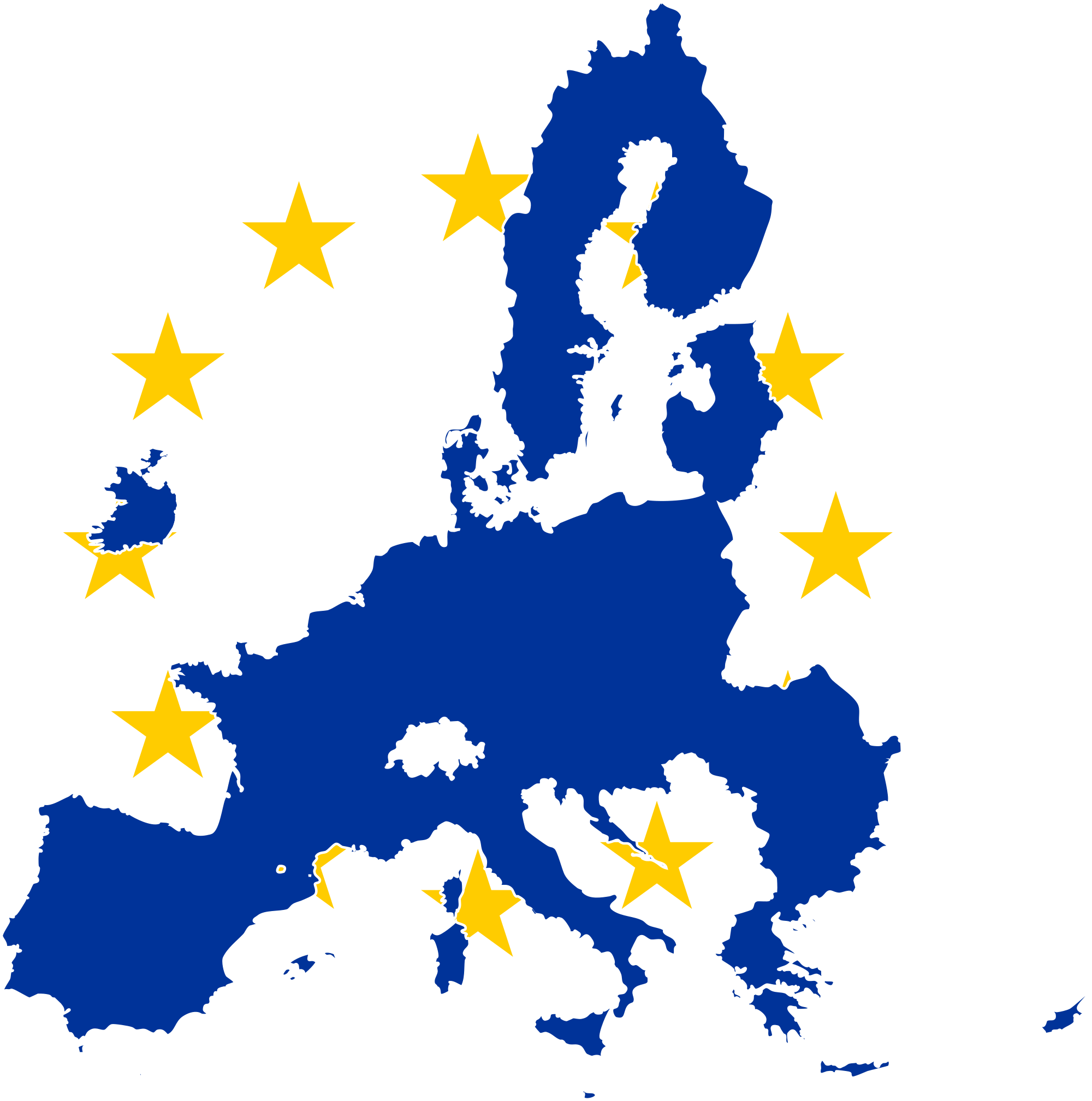
Showing posts with label Europe and the regions of the European Union ("de l'espace européen aux territoires de l'Union Européenne"). Show all posts

Sunday, 22 January 2017

Is everybody in the UK becoming middle-class?

UK map showing the diversity of the English language


Why are schools trying to wipe out regional accents?
Adapted from an article by Lynsey Hanley
theguardian, Monday 23 May 2016

The news that trainee teachers are being encouraged to adopt a more middle-class accent and lose their regional accents in order to be better “role models” for schoolchildren is part of a worrying trend…

Call it the “Downton effect”, or the return of old-fashioned snobbery, but there is, increasingly, one acceptable way to be in society: middle class and from the south-east of England.

As if further proof were needed that the dominance of middle-class values and identity is becoming more powerful, the linguistics researcher Alexander Baratta has reported that trainee teachers from the north and Midlands are being asked by their supervisors to lose their regional accents in order to be better “role models” for schoolchildren.

What he terms “linguistic prejudice” is essentially another form of class prejudice: northern accents, in particular, are perceived to be exclusively working class, with scouse accents firmly at the bottom of the value scale (a couple of months back, casting agents for a new Morrisons advert put out a call for people with northern accents to appear in the campaign, but with the firm instruction: “Nobody from Liverpool, please.”)

Teacher trainees from Leicester, Nottingham and Eccles interviewed by Baratta were told to “speak properly” – in other words, without a regional accent – and that their pronunciation was “too common”.

It provides further evidence that teachers are being inducted into an education system designed to produce, essentially, identical types of people. People with identical accents, communication styles and methods of personal presentation are well primed to work in the private sector, to earn above the median, and to compete for work on the basis of not being different, but of simply being better at doing exactly the same thing.

Becoming socially mobile is simply a matter of someone from a non-professional background getting into the professions. Take a rough diamond, polish it and send it back out into the world more economically productive than before. Such simplistic logic denies the experience of social mobility, which for many people – as revealed by the subjects of Baratta’s study – involves being asked to change fundamental aspects of who they are in exchange for achieving their ambition.

Schoolchildren interviewed by the education researcher Diane Reay noted how such forms of snobbery are passed down, from teacher trainer to teacher, from teacher to pupil. “Some teachers think a pupil is stupid because he hasn’t got a posh accent,” said one child. “I think telling you a different way of speaking is sort of good, but I think the way they do it isn’t good because they correct you and make you look stupid.”

Pupils realise the importance of clear communication, and are aware that being given the chance to acquire some of the skills of the dominant class may go on to serve them better than a well-meaning teacher who pretends such things don’t matter. What pupils resent is the implication that to sound working class is automatically to sound stupid.

As aspects of culture become more centralised and focused on London, it stands to reason that the “dominant person” – the person who is valued most, who is viewed as the most civilised – happens to be middle class and to speak in a standardised south-eastern accent. It’s especially the northern museums that are closing, the northern councils that have to prioritise adult care over libraries and parks because they can’t afford both. The BBC’s 5 Live and CBeebies channels may have moved to Salford, but you’d never guess it from the accents of its presenters.

The sociolinguist Peter Trudgill noted as long ago as the 1970s that language use had begun to change, and to some extent to level out, in smaller towns due to the undue influence of larger, more culturally dominant cities. But this is clearly not the sort of natural linguistic levelling that is brought about by people moving around more often. The urge to devalue regional accents is part of a deliberate process. We’re all being taught that the only acceptable role model – intelligent, authoritative, responsible – is now a middle-class one.

Wednesday, 28 December 2016

"London is the world’s greatest city; we cannot sit back and do nothing about the rough sleeping crisis."

 2015 photo from theguardian

The text below was adapted from an article published in theguardian, dated Sunday 17 July 2016 (click HERE), written by Sadiq Khan.

Close partnership and innovative approaches are needed to curb the rising numbers of homeless people inherited from the Conservative administration of London. I am committed to tackling London’s housing crisis in whatever form it takes – and the rise in rough sleeping over recent years is a growing source of shame that we have a moral imperative to stop.

People end up on the street for many different reasons – leaving care or hospital, problems with debt, unemployment, mental health, family breakup – and so the help they need is varied too. We can support some rough sleepers, particularly when they have become homeless recently, through programmes such asNo Second Night Out.

In more entrenched (i.e. long-term) cases regarding homeless people, a more intensive intervention may be needed, as a one-size-fits-all (i.e. one solution to all problems) approach does not always work. We can promote innovative approaches by making our funding of agencies that help homeless people conditional on these agencies achieving results – an approach that has proved successful in helping people access and remain in stable accommodation.

But, crucially, we need not only to help rough sleepers on the street, but also to prevent people from becoming homeless in the first place – and that’s why I’ll be launching a No Nights Sleeping Roughtaskforce with prevention central to its approach. This taskforce will bring together all the agencies to tackle rough sleeping as we will only make a difference through close partnership. The taskforce will set the strategic priorities for services the mayor provides, come up with proposals for new initiatives and projects, and lobby government for the changes we need.

A Labour mayor and government dramatically reduced rough sleeping at the start of this century and I’m determined we’ll do it again. Making a difference won’t be easy, but I will lead the way.

To do:

1) Listen to the teacher read and comment the article, noting pronunciation, vocabulary and expressions, and summarising the main points of the article.

2) Read the following information on theguardian:

theguardian is a British national daily newspaper. It was founded in 1821. It is edited by Katharine Viner. It is part of an international media group which includes The Observer (a British Sunday paper) and The Guardian Weekly (an international roundup of articles from various papers). In 2013, The Guardian's print edition had an average daily circulation of 189,000 copies, behind The Daily Telegraph and The Times, and ahead of The Independent. The newspaper's online edition was the fifth most widely read in the world as of October 2014, with over 42.6 million readers.  In the UK, its combined print and online editions reach 9 million readers. The Guardian was named newspaper of the year at the 2014 British Press Awards for its reporting on government surveillance.

3) Answer the following question:

What type of people read The Guardian do you think?

4) Translate the title:

"London is the world’s greatest city; we cannot sit back and do nothing about the rough sleeping crisis."

5) Read the following information about Sadiq Khan:

Sadiq Aman Khan (born 1970) has been Mayor of London since May 2016, succeeding Conservative Party Mayor Boris Johnson. Khan was the Member of Parliament (MP) for Tooting from 2005 to 2016. He is a member of the Labour Party. His election as Mayor of London made him the city's first ethnic minority mayor, and the first Muslim to become mayor of a major Western capital. As mayor he has limited charges on London's public transport and focused on uniting the city's varied communities. He was an active supporter of the unsuccessful Britain Stronger in Europe campaign to retain the United Kingdom's membership of the European Union.

6) Answer the question:

Why does Khan describe London as “the world’s greatest city”?

7) Read the following information about the Labour Party:

The Labour Party is a centre-left political party in the United Kingdom. Growing out of the trade union movement and socialist parties of the nineteenth century, the Labour Party encompasses a diversity of ideological trends from strongly socialist to moderately social democratic (social democracy includes the belief in collective responsibility for social welfare). Founded in 1900, the Labour Party overtook the Liberal Party as the main opposition to the Conservative Party in the early 1920s, forming governments under Ramsay MacDonald in 1924 and from 1929 to 1931. Labour later served in the wartime coalition from 1940 to 1945, after which it formed a majority government under Clement Attlee. Labour was also in government from 1964 to 1970 under Harold Wilson and from 1974 to 1979, first under Wilson and then James Callaghan. The Labour Party was last in government from 1997 to 2010 under Tony Blair and Gordon Brown. Having won 232 seats (out of 650) in the 2015 general election, the party is the Official Opposition in the Parliament of the United Kingdom. In September 2015, Jeremy Corbyn was elected Leader of the Labour Party.

8) Question:

Why does Khan want to solve the problem of rough sleeping?

9) Read the following information about sleeping rough in London:

According to the CHAIN (Combined Homelessness and Information Network) database, 8,096 people slept rough at some point in London during 2015/16, an increase of 7 per cent compared to 2014/15 (though these figures are probably an underestimate). 57 per cent are aged between 26 and 45 years with 1 in 10 under 25 and 11 per cent over 55. 43% have problems due to alcohol, 31% have problems due to drugs, and 46% have mental health problems. 32% had served time in prison. 41% are UK nationals, 37% are from Central and Eastern European countries, 2% are refugees from Eritrea and Somalia. About 15% of rough sleepers in London are women (many have been physically attacked, verbally abused and sexually assaulted). Reasons men end up on the streets include: relationship breakdown, substance misuse, and leaving an institution (prison, care, hospital, etc.). Reasons women end up on the streets include physical or mental health problems and escaping a violent relationship. Social causes include: high levels of poverty, unemployment, the inadequate benefits system, lack of affordable housing and poor management of social (council) housing. Emergency accommodation includes: cold weather or winter shelters, night shelters, emergency hostels, nightstop schemes for young homeless people aged 16 to 25, women's refuges for women fleeing domestic violence.

10) Questions:

> What do you think the consequences of sleeping rough are on individuals?
> What do you think the consequences for London are of having people sleeping rough?
> Is there a problem of people living on the streets in the area you live?
> What solutions to solving the problem of homelessness can you come up with?

Further research:


Wednesday, 2 November 2016

‘Bullying is soul-destroying’


Tamanna Miah

Tamanna Miah is 22 and in her third year at university, but still carries the emotional and physical scars from the racial bullying she suffered throughout primary and secondary school.

Her family are from Bangladesh and she grew up in Sevenoaks, Kent, where she was the only non-white child in her primary school. The bullying started almost as soon as she began school, she says, around the age of four.

“I was the only Asian kid in my area and in my school. People used to bully me for my looks, my skin colour ... they did everything to make my life hell. They called me names, put sticks and rubbish and chewing gum in my hair. They would chase me and throw things at me. They pushed me off a wall. Even today I’ve still got the marks on my leg from when that happened. Staff often ignored it. They would say I was being silly, that I was making it up.”

Miah was so unhappy at school her parents had to drive her there “kicking and screaming”; she would pretend to be ill and try to hide to avoid going to school. She began to lose confidence in the way she looked and used her mother’s skin products to try to lighten her skin so she would “fit in” with her peers.

Bullying has changed her life, she says. “It’s soul-destroying, it really is. I know how much I suffered and I wouldn’t want anyone else to go through it. I suffered severe depression and anxiety as a result. I was so isolated.

“I had no confidence, I had no self-esteem. I couldn’t talk to my parents and my teachers didn’t understand. I felt suicidal a lot of the time.”

Far from school being a safe haven, Miah believes children feel particularly vulnerable there, and that teachers don’t realise how much of an impact experiences of bullying have on a child’s wellbeing.

“You should be feeling safe – you spend such a lot of your life at school. But you are open to so much there. You’re meeting other young people. You have to be there. You are there on a daily basis.”

Miah believes her grades suffered as a result of the bullying, which was a constant distraction from her studies. Now she campaigns on issues surrounding bullying and has made a film to show what it’s like to be a victim.

“These days schools do have more policies in place but it’s almost like bullying is a normal part of childhood. We need to break out of that. It’s not normal. I don’t think people realise how detrimental it is.”

> TED talk given by Tamanna: click HERE!

> Tamanna's video: click HERE!

> "Agir contre le harcèlement à l'école" (short film in French)click HERE!

> Article on bullying from theguardianclick HERE!

Thursday, 16 June 2016

Our new region: Auvergne-Rhône-Alpes


A few links:

Web site of the Région Auvergne-Rhône-Alpes
Wikipedia article in English about the new region
Wikipedia article about the new region in FRENCH
Articles in La Montagne about the "pôle métropolitain" Clermont-Vichy

Here are the titles to choose from for your essay (+ oral presentation):
  1. Would you prefer to live in Perth, Australia?
  2. Why, from your point of view, is democracy “the worst form of government, except for all the others”?
  3. Does power inevitably corrupt?
  4. How easy is it for teenagers to set up a project (civic action, cultural activity, etc.) in the region you live in (give as an example a project you have set up or are involved in or have tried to set up)?
  5. In Auvergne-Rhône-Alpes, what are the possible economic, social and political consequences of concentrating power in Lyon?”
  6. Is it possible to feel one “belongs” to a region as big as Auvergne-Rhône-Alpes?
  7. Is the Auvergne the “Wild West” of Auvergne-Rhône-Alpes?
  8. How dynamic a region can Auvergne-Rhône-Alpes become within the EU?
  9. How would you increase learning opportunities for the pupils, students and apprentices from the Région Auvergne-Rhône-Alpes?
  10. What would make you want to continue living in the Région Auvergne-Rhône-Alpes?
  11. How would you increase employment opportunities in the Région Auvergne-Rhône-Alpes?
  12. How can the Région Auvergne-Rhône-Alpes facilitate labour mobility, both geographical and occupational?
  13. How would you improve transport to and out of, and within, the Région Auvergne-Rhône-Alpes (especially for under-25 year olds)?
  14. How should the Région Auvergne-Rhône-Alpes promote social justice?
  15. Should we do more for refugees in our region (Auvergne-Rhône-Alpes)?
  16. What should the priorities of the Région Auvergne-Rhône-Alpes be do you think?
  17. What are your suggestions to make the Région Auvergne-Rhône-Alpes a great place to live and work?

Friday, 5 December 2014

Europe to build new-generation Ariane 6 rocket

Ariane 6 (artist's concept)
  1. European nations announced last Tuesday they would build a new generation rocket in a multi-billion-euro programme to maintain their grip on the world market for satellite launches.
  2. European Space Agency (ESA) ministers "took a major decision to develop a new launcher, the Ariane 6, which will replace the Ariane 5, with a maiden flight scheduled for 2020," French Research Minister Genevieve Fioraso said in a statement describing the deal as "historic."
  3. Tuesday's agreement came after months of behind-the-scenes haggling to ease a rift between France and Germany over Ariane 5's successor.
  4. "This is a very important day for the space agency after sometimes very tough but very fair and open discussions," said Luxembourg Economy and Trade Minister Etienne Schneider.
  5. "It's a success, I even dare to call it a big success," said Jean-Jacques Dordain, ESA's director-general, explaining that nations had pledged nearly 6 billion € (nearly $7.5 billion) for operations in the coming years.
  6. He praised member states for making "an exceptional effort... because we know that the economic situation is difficult."
  7. Four billion euros have been earmarked for Ariane 6, of which 400 million euros will come from industry, officials said. A review of progress will be made in 2016.
  8. Over 10 years, the 20-nation alliance will spend about eight billion euros on its launcher programme, including infrastructure such as a new launch pad at its base in Kourou, French Guiana.
  9. The Ariane 5 traces its roots back nearly three decades. A medium-to-heavy workhorse with an unbroken string of more than 60 successful launches to its name, it accounts for more than half of the world's commercial launch market.
  10. Despite its reliability, Ariane 5 comes with high operational costs compared to nimble US commercial newcomers such as SpaceX.
  11. "With this historic decision, the member states have given a strong reply to international competition in a strategic sector for European sovereignty, industry and jobs," Fioraso said.
  12. "They showed that when it is united, Europe is strong and can respond collectively to challenge."
  13. A replacement for the Ariane 5 had been a source of friction for the last two years, with France and Germany - ESA's two biggest contributors - pushing alternative approaches.
  14. Germany said a new rocket would take so long to develop that rivals would have grabbed a fat share of the satellite market by the time it was ready.
  15. It argued for a modified version of the existing rocket - the Ariane 5 ME, for Midlife Evolution - which would be ready by 2017 and yield early operational savings.
  16. France had lobbied for switching directly to Ariane 6, whose first flight would take place in 2021 or 2022.
  17. It argued the ME would drain crucial resources and lead to duplicated effort and probable holdups.
  18. Under a compromise, the Ariane 6 will incorporate existing designs from the Ariane 5, ME and other projects.
  19. It will culminate in two versions - a two-booster or four-booster design - able to take between five and 10 tonnes into orbit.
  20. It will include a solid rocket motor, the P120C, being designed as an upgrade for ESA's Vega launcher that should be operational from 2018, as well as a strap-on booster.
  21. But much of the rest will come from the Ariane 5, thus saving development costs and time, according to engineers.
  22. According to Stephan Israel, head of Arianespace, which markets ESA's services, the current market price for a single launch of two satellites "is around $120 million."
  23. The public face of the wrangle was about different approaches in engineering, driven by arguments of cost overruns and delay.
  24. But an undercurrent was about sharing the funding bounty within Europe's space industry. France and Germany together account for nearly half of ESA's financing for launchers.
  25. In return for climbing down on the ME, Germany lobbied France and Italy to beef up contributions to the International Space Station (ISS), where German firms have a big stake.
  26. ESA had sought a three-year, 820-million-euro budget for the manned outpost in space.
  27. "We have a figure of 800 million €, it is more or less what we have requested," said Dordain.

To do/questions:
  1. Translate the December 3, 2014, AFP wire story above (each pupil translates one or two paragraphs).
  2. List and learn new words and expressions.
  3. List the positive aspects of Ariane 5 (use the information in the text, your own knowledge/opinion, and information you can find on the Web).
  4. Why is the ESA wanting to build a new satellite launcher?
  5. What difficulties has the Ariane 6 programme faced?
  6. Why is the ESA weary of the SpaceX programme?
  7. Watch the video in the following link: Satellites of love
  8. Write a 60-second speech explaining how Europe can, from your point of view, maintain its lead in the satellite launch service industry.

Sunday, 9 November 2014

LECTURE: What is a “region” in the European context?

What is a “region”?

We can divide the earth into numerous areas (territories, spatial units, etc.). These areas or “regions” can be defined in numerous terms: directional, geographical, historical, cultural, administrative, political and economic.

“Region” refers then to an area that has ONE or MORE of the following defining characteristics:
  • a location relative to another (it is in the “West” of Europe for example);
  • a particular landscape (which makes it different from other landscapes);
  • a degree of physical separateness from other areas (an island for example);
  • a particular history (often, man-made features - old or recent - give the landscape its character);
  • a people with a sometimes quite strong sense of identity (often with a dialect and cultural practices and values that set it apart);
  • a degree of political, economic and/or administrative autonomy from a bigger (dominant) area in which it is situated (e.g. Scotland is a “country” within the United Kingdom);
  • a population which wants a greater degree of autonomy from a bigger area in which it is situated (e.g. Catalonia);
  • a political and administrative jurisdiction (often dependent on a jurisdiction that is bigger and that has power over it), i.e. it is a territory over which an authority exercises its power (e.g. the Conseil Régional d’Auvergne, which is less powerful than the French State);
  • administrative boundaries (these are changeable).

“Region” is a term that can be used precisely, but a “region” is often loosely defined to cover a vague reality: an area of indefinite size with no clearly defined boundaries inhabited by a people with a nebulous notion of common history and cultural identity (for example: “Auvergne” can refer to the administrative unit called a “Région” as well as to a rather nebulous part of central France with a particular landscape and a people with some shared cultural practices).

“Regions” in the context of Europe

In Europe, “region” can refer to a part of the Continent according to its compass direction: Northern, Southern, Eastern, Western, or Central Europe.

It can also refer to historical divisions, for example “Communist (Eastern) Europe” versus “Capitalist (Western) Europe” during the Cold War period.

In geographical terms a “region” is a particular area that has:
  • physical characteristics (which differentiate it from other areas);
  • human-impact characteristics (i.e. that result from how humans have adapted to or changed their environment to meet their needs and wants).

(“Regional geography” is the discipline that studies (describes) regions of all sizes across the Earth).

The geographic regions of Europe (cf. GAME) as defined by their physical characteristics are:
  • Alpine countries: the Alps are in parts of Austria, Switzerland, Liechtenstein, Slovenia, Germany, France, and Italy.
  • Apennine Peninsula: Italy, San Marino, Vatican City
  • Balkan Peninsula: includes all or part of Albania, Bosnia-Herzegovina, Bulgaria, Croatia, Greece, Kosovo, Republic of Macedonia, Montenegro, Romania, Serbia, Slovenia, Turkey
  • Baltic States: Estonia, Latvia, and Lithuania
  • Benelux: Belgium, the Netherlands, Luxembourg (aka the Low Countries)
  • British Isles: United Kingdom, Republic of Ireland, Isle of Man (+ Guernsey, Jersey?)
  • Carpathian Mountains: mostly in Romania
  • Caucasus: Armenia, Azerbaijan, Georgia, North Caucasus
  • Danube countries: the River Danube flows through Austria, Bulgaria, Croatia, Germany, Hungary, Moldova, Romania, Serbia, Slovakia, Ukraine
  • Dinaric Alps: in the Balkans
  • Great European Plain: Poland, Germany, France
  • Iberian Peninsula: Spain, Portugal, Gibraltar, Andorra
  • Iceland
  • Mediterranean countries: European countries along the Mediterranean Basin are Portugal, Spain, France, Monaco, Italy, Slovenia, Croatia, Bosnia and Herzegovina, Montenegro, Albania, Greece, Turkey, Cyprus, Malta
  • Nordic countries: Sweden, Norway, Finland, Estonia, Denmark, plus Iceland?
  • Pyrenees Mountains: between Spain and France
  • Russian Plain: covering Eastern Europe and Western Russia
  • Scandinavia (Scandinavian Peninsula): Sweden, Norway, Denmark

Political/economic regions of Europe:

“Region” can also refer, in the European context, to the territory of a political/economic group, for example:
  • The region made up of the 28 European Union countries (Austria, Belgium, Bulgaria, Croatia, Cyprus, the Czech Republic, Denmark, Estonia, Finland, France, Germany, Greece, Hungary, Ireland, Italy, Latvia, Lithuania, Luxembourg, Malta, the Netherlands, Poland, Portugal, Romania, the Slovak Republic, Slovenia, Spain, Sweden and the United Kingdom). Cf. GAMES
  • The region made up of the 17 Eurozone countries have the Euro as their common currency: Austria, Belgium, Cyprus, Estonia, Finland, France, Germany, Greece, Ireland, Italy, Luxembourg, Malta, the Netherlands, Portugal, Slovakia, Slovenia and Spain. Cf. GAMES
  • The Schengen Area is a region within Europe with no internal borders made up of 25 countries: Austria, Belgium, Czech Republic, Denmark, Estonia, Finland, France, Germany, Greece, Hungary, Italy, Latvia, Lithuania, Luxembourg, Malta, Netherlands, Poland, Portugal, Slovakia, Slovenia, Spain, Sweden, Norway, Iceland and Switzerland.

Other groups

There are other pan-European groupings, economic, political, but also in other domains. The “region” covered by a group is made up of its members (often States). Examples are:

Three major regions

Contemporary Europe is sometimes divided up into three major regions, very broadly defined according to their geographical location, economic power, and cultural particularities:
  • North-West Europe: characterized by having the first member countries of the EU, the most powerful agricultural, industrial, business and financial infrastructure, and command centers of international importance (London, Paris, Frankfurt). Population density is high, as are standards of living.
  • Mediterranean Europe: characterized by indebted States, small to medium-sized businesses, and an active parallel economy. Economic and demographic growth is slow.
  • Central and Eastern Europe: poor former Communist countries with slow demographic growth, recently integrated to the EU. EU businesses make use of the cheap labor force and these countries benefit from EU Regional Policy funds.


Europe can also be divided into central (dominant), dependent, and peripheral regions according to economic, political and demographic criteria:
  • The dominant region is the densely populated and wealthy “blue banana” from Manchester to Milan with a strong concentration of decision-making centers (major urban zones).
  • The dependent regions are close to the “blue banana”;
  • The peripheral regions are further away (cf. map and page 103 of the Terminale textbook).

Other criteria to define a “region” in the European context

Europe can be divided into regions according to various other criteria such as:
  • Population (number of people within an area determines a statistical and administrative “level” in the NUTS, i.e. the Nomenclature of Territorial Units for Statistics);
  • Wealth: rich and poor regions (NUTS levels can be used to show disparities of wealth, cf. document 1, page 102 of the Terminale textbook);
  • Political and administrative authority: the term "region" refers to a territorial authority existing at the level immediately below that of the central government, with its own political representation in the form of an elected regional assembly (sub-national authorities include regions, counties, provinces, municipalities and cities);
  • Cross-border regions (territories that are in two countries at once) are an initiative of the EU, they are called “Euroregions” (e.g. the Biharia Euroregion which is in both Hungary and Romania); the purpose of these regions is to stimulate trans-national cooperation between two member states of the EU.

What is the "blue banana"?!

Sunday, 28 September 2014

The majority of Scottish people vote "NO" to an independent Scotland


Back from the brink: Scotland stays in the UK
THE DAY, Friday 19 September 2015

The 307-year-old union between Scotland and the UK survived this morning. 55% of voters said ‘No’ to independence. But politics will never be the same again in Britain.

The United Kingdom remains united and Scotland has rejected the opportunity for independence. In answer to the referendum question: ‘Should Scotland be an independent country?’, 45% voted Yes, but 55% voted No.

It was the busiest day in Scottish electoral history: 4.3 million people — 97% of the electorate — had registered to vote (including 16 and 17-year-olds voting for the first time in a UK election). Turnout was an astonishing 85%.

This was a tumultuous end to what had become, over the last six weeks, an exhilarating roller-coaster ride of political engagement. Many agreed that even though the No team won the vote, the Yes team won the campaign. ‘It has outwitted the three main Westminster parties who spent so long worrying about their positioning ... that they have forgotten about voters’ said Fraser Nelson, editor of The Spectator.

After decades of decline, democracy came alive in Scotland in recent weeks. Nearly everyone had an opinion and was willing to defend it. They informed themselves on every aspect and shared what they learned with others. One commentator recorded his delight in tasting ‘the pure bubbling water of democracy’.

The rejection of independence does not mean that things will stay the same. In the last fortnight as Yes and No ran neck and neck in the polls, the three national party leaders hurriedly pledged that further powers would be transferred to Edinburgh. Gordon Brown called it ‘home rule within the UK’. Changes include greater control over finances and will radically shift power away from Westminster.

But these promises, underpinned by a guaranteed subsidy through the Barnett formula, have already caused deep resentment in other parts of the UK. A huge political row is brewing for Prime Minister David Cameron over ‘the English Question’. Some MPs are now calling for an English parliament. Wales and Northern Ireland are expected to follow.
Unfinished business

Scotland’s First Minister is Alex Salmond, without whose extraordinary political skills it is unlikely this referendum would ever have taken place, let alone have come so close to success. He said last week that this vote would settle the question of Scotland’s independence for a generation and he did not anticipate a 'neverendum'.

But is that likely? The people of Scotland have rediscovered their passion for politics and a belief in the possibility of change. And nearly half of them have just rejected the current political setup. As the general election next May approaches, both north and south of the border there is enough energy and resentment for a perfect storm of political upheaval.

To do/questions:
  1. Research and explain the words and phrases highlighted in grey.
  2. How old is the union between Scotland and England?
  3. Did those who voted YES to the referendum win?
  4. What was the winning margin?
  5. How many people took part in the referendum?
  6. Who "forgot about voters"?
  7. Why do you think the three main parties promised further transfers of powers to Edinburgh?
  8. Why are some MPs calling for an English Parliament?
  9. Will there be another referendum on Scottish independence soon?
  10. Name and describe the three main UK parties.
  11. What is the SNP?
  12. What other areas of Europe want independence and why?

KERNOW soon?

Click HERE to read the article from THE DAY!

Cornwall is one of the poorest regions of the UK and one of the “marginal” regions of Europe… How is it being developed? What are the inhabitants of the county, the region’s industries and businesses, Cornwall Council, the UK government, and the EU, doing to improve the region’s situation?

2015 is European Year for Development in which the issue of EU spending priorities will be discussed; should the EU give so much aid to countries outside the EU when it, and the poorer regions of Europe in particular, are undergoing an economically difficult time ?

David Cameron and the Conservatives were re-elected to the UK government in May 2015. The issue of continued UK membership of the EU will therefore probably be put to a referendum; “Brexit” (i.e. the UK leaving the EU) is becoming a strong possibility… If the UK is no longer a member of the EU, what will happen to Cornwall if it no longer benefits from EU help?

Wednesday, 24 September 2014

English rules...


Babelling on: Brussels versus the English language
THE ECONOMIST, December 13th 2006

In their loftier moments Brussels politicians say that languages are an expression of the European Union's unity in diversity. What they seldom admit is that languages are a logistical and expensive headache, as well as a cause of nationalistic squabbles. All these could increase when the tally of official languages in the EU rises from 20 to 23 on January 1st 2007, with the addition of Romanian, Bulgarian and Irish.

There is impeccable democratic logic for the EU to do business in the language of its citizens: hence the addition of Bulgarian and Romanian when these countries join next month. It is less obvious why Irish is being added to the list. Although it is an official language of Ireland, it is a minority one that the Irish government declined to use when it joined in 1973. The government concedes that less than half the population can speak it and a mere 5% actually use it. But Charlie McCreevy, Ireland's European commissioner, insists it is central to Irish cultural identity.

Asserting cultural identity may be more important in a growing club. Ireland's decision has raised the stakes for other countries. Last year Spain requested semi-official status for Catalan, Galician and Basque. The Spanish government will foot the bill for translation services for Spaniards who prefer to use those languages. Welsh nationalist politicians are now lobbying the British government to get the same deal for Welsh, although not so far to any effect.

Getting national governments to pick up the tab for using regional languages can keep the EU's costs down. In 2005 the union spent some €1.1 billion ($1.4 billion) on translation and interpretation. This pays for staff to interpret at 11,000 meetings a year and to translate more than 1.3m pages of text. One result of the latest enlargement is that the commission has instructed officials to write shorter, snappier communications that cost less to translate. But not all problems are so easy. A plan in 2002 to simplify European patents failed when some countries blocked it because the new patent would be only in English, French and German. Subsequent efforts to find a compromise have foundered because of high translation costs.

English, French and German are the main working languages of the European Commission, a truce agreed some 20 years ago. At that time half of all EU documents were drafted in English. Now it is around two-thirds, as enlargement to Scandinavia and Eastern Europe has created a bigger group of people with English as their first choice of second language. This points to an unsettling conclusion for advocates of multilingualism: in a union of many languages, increasingly there is but one language.


To do:
  1. Describe and comment the photo above the text.
  2. Translate the highlighted words and phrases in the text above.
  3. Describe what THE ECONOMIST is.
  4. Draw up a list of minority languages used in Europe.

Questions:
  1. Why is Irish being added to the list of official languages?
  2. What is the “growing club” (first sentence, third paragraph)?
  3. Who do you think should pay for the cost of translation and interpretation of regional languages at Brussels (the EU itself or national governments)?
  4. Who are the “advocates of multilingualism” (last sentence of text)?
  5. Which language is the most used in the European Union institutions and why is it the most used?
  6. Do you defend the use of several languages for European Union institutions?